
Sam: What is KADI?
Kit: It’s a platform for coaches to organize their sessions, plan their lesson, track attendance, and manage the business around private training. Coaches already do those things, but they’re often spread across five different platforms. We’re trying to bring them into one place.
Maddie: One coach described the goal really well: he wanted to show up to his session and press play, and have that be all he needed to worry about. If we can help him do that and handle the rest, that would be pretty cool.
Sam: You started the summer calling your product CoachLink. Where did KADI come from?
Kit: CoachLink was taken. We went through CoachPad, too, before landing on KADI. It’s Kit plus Maddie, and there’s the double meaning of a caddie: someone who helps you with your game. In our case, it’s your caddie for your coaching business.
Sam: Got it, we’ll carry the clubs for you.
Sam: What did getting the first version into people’s hands look like?
Maddie: In June, we were concentrating on the coach side: creating sessions, adding athletes, sending invitations, and exporting sessions to a calendar. We had a live web version, and we tested it on your phone over zoom from the airport. That turned up a lot of little things—buttons that didn’t respond, text getting cut off, and a calendar export that was much more cumbersome on mobile than we’d expected.
Sam: I remember us trying to get that file into Google Calendar. It was a good reminder that the whole experience has to work, all the way through to the calendar someone actually uses.
Maddie: We also had a dedicated calendar view underway, but the question was whether coaches even wanted another calendar. We needed to get it into a coach’s hands and learn. By July, we had a version on TestFlight and were working directly with coaches. It was a series of builds and trials rather than one big launch.
Sam: What changed when you started spending time with coaches?
Kit: We started being much more deliberate about understanding their workflow. After a conversation, we’d sit down and map out what that person did and where we could make it better. How do players find them? How do they arrange a session? How do they know who’s coming and who’s paid?
Maddie: One of the coaches in Puerto Rico let me coach with her. We took one of our check-in calls from the car before practice, then went to help get her athletes set up. Working with her made the session-planning idea much more concrete. It would be useful to plan the drills in advance and then actually run the session from that plan.
Sam: What were the three biggest product improvements this summer?
Maddie: The first was planning and running a session. A coach can put together drills, attach media—an image or something they saved for inspiration—and use timers and rounds to work through the plan. We also built reusable templates, so they don’t have to start over every time.
Kit: That became interesting for larger programs, too. A head coach could create a session library and share plans with assistant coaches. We met with a golf program whose coaches were working from several huge PDFs. Seeing the process they went through to find and print drills made the value of a shared library really clear.
Maddie: The second was booking and availability. Coaches liked the organization and attendance tools, but several said they needed to put their availability up and take bookings before they’d move their clients over. We had always imagined that being part of the product; hearing it repeatedly moved it up the list. By the last call, we’d built the marketplace flow and were still debugging it before release.
Kit: And the third was making the overall experience easier to use. We put a lot of late nights into a friendlier interface. The value coaches kept describing was having the schedule, planning, attendance, and payment information together, so making those pieces work together mattered.
Sam: How many people were actually using it by the end of July? Any paying?
Kit: Three coaches were using it. One of those programs ran three times a week; another coach was only doing one training a week during the summer. We still needed much better usage data.
We also had coaches waiting for the booking update and interest from a golf program with 15 coaches. That was exciting, but those were prospective users. We still had to get them onboarded.
Maddie: We weren’t processing payments for the coaches yet. We’d set up a Stripe Connect integration, but we needed to test it thoroughly. Someone we’d shown the product to said $20 a month sounded reasonable for the value he’d get. That was encouraging feedback, but we hadn’t made our first dollar yet.
Sam: Any favorite pieces of feedback from a specific coach?
Kit: A goalkeeping coach sent me a voice note asking for a waitlist. Once a session filled up, he wanted other athletes to be able to join the list, then take a spot if someone canceled. He hadn’t even started using the app yet, but he was already thinking through exactly how it could fit his business. That was one of the first really specific feature requests we got.
Maddie: We also talked about what parents would want to see during a session. If they could follow its progress and see when it was going to end, they’d know when to come pick their kid up. That became a direction we were excited to explore, along with eventually putting the session timer on the coach’s lock screen.
Sam: What surprised you most about your users?
Kit: We met a tennis coach with a website, email inquiries, text messages to arrange lessons, a paper calendar, cards to track sessions, and several payment links his son managed. To us, that looked like a lot of work. But he’d been doing it for years, was fully booked, and wasn’t interested in changing it.
That was still a useful conversation. We got to understand the whole process, and it was practice at talking to someone about what they actually do. A workflow looking inefficient to us doesn’t mean its owner wants to replace it.
Maddie: Being athletes helped us reach people. I could message coaches on Instagram, and being a Brown soccer player gave them some context for who I was and why I cared. People were willing to get on calls.
Sam: Were there directions you decided not to pursue?
Kit: After talking to a personal trainer, I briefly thought that could be another audience. But the more we spoke to soccer and golf coaches, the more different that use case seemed. The conversations were helping us get more focused.
Maddie: We could see overlap between private coaches, teams, and bigger training organizations. They might all use scheduling and session planning. That didn’t mean we needed to build every business feature for all of them. For clubs, for example, we weren’t trying to take on their payment management.
Sam: There were so many promising directions that I was getting a little nervous on your behalf. The live coaching experience was the thing that really excited me. I wanted you to keep making something coaches would love using as you explored those other possibilities.
Sam: How did you split the work?
Kit: We both built things. In June, I was working on the calendar while Maddie worked on the player invitation flow. By late July, I was going out and finding people to talk to almost every day, then bringing what I learned back to Maddie.
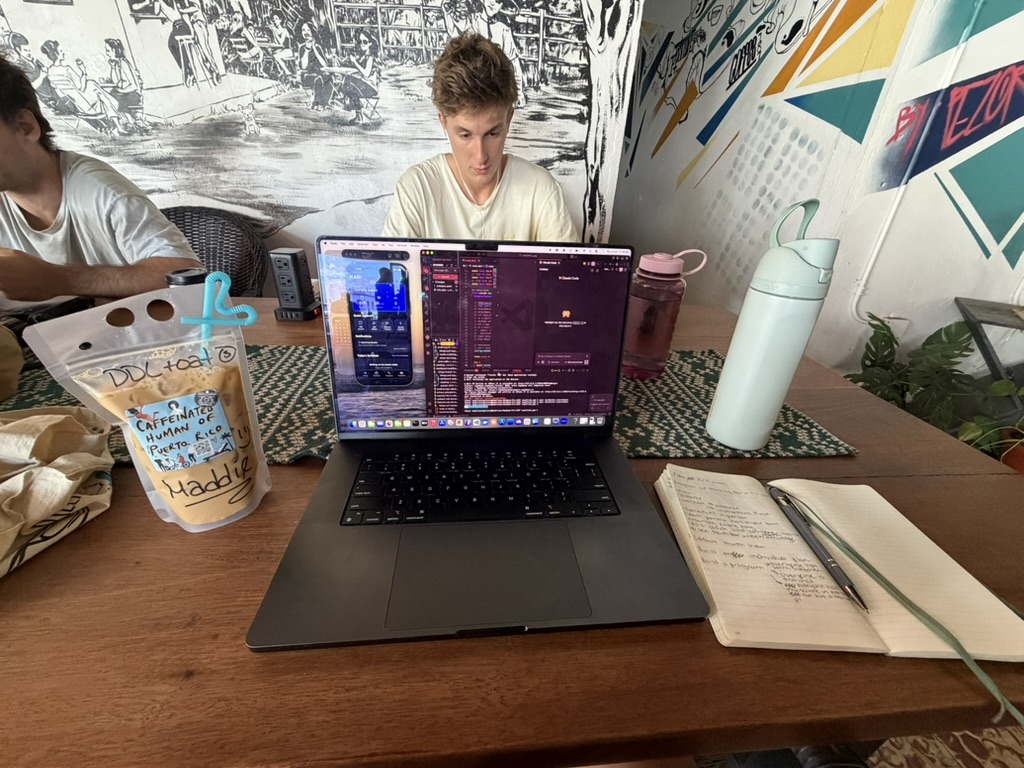
Maddie: I was also doing outreach and talking to coaches, and coaching with the girls gave me another way to understand the product. Working in the same place in Puerto Rico made things easier, too. We could hear something from a coach and work through it together.
Sam: What was your favorite part? And what was hardest?
Maddie: Coaching with the girls was such a great experience. At my last session before leaving Puerto Rico, they seemed genuinely bummed that I wasn’t going to be there anymore. That was really sweet.
Kit: The golf meeting was another highlight. We showed the product, and the response was that they wanted it. It didn’t feel like we were begging someone to try it.
The hard part was figuring out what to build as every conversation brought something new. As we talked to more people, the requests started to overlap, which made the direction feel clearer. But we still needed to get more people actually using it.

Sam: What would you tell another student starting a software product?
Maddie: Figure out what’s most important to the people you’re building for before spending all your time polishing. In July, we were much more concerned with understanding coaches’ processes than ironing out every rough edge. We wanted to know what we needed to do before wasting time doing it.
Kit: Talking to people is a muscle you have to work. Go up to someone, ask how they do things, and figure out whether you can make the transition easy for them. We realized we could do the onboarding with them instead of expecting them to figure it all out alone.
Sam: One question we kept coming back to was: what would you really love to not have to do anymore? That’s a useful place to start.
Sam: What comes next?
Maddie: Finish testing the booking and payment flows and get the update into the hands of the coaches we’ve been talking to. Then keep learning from how they use it. There are ideas we’re excited about—player goals, progress tracking, drills to do at home—but those can come later.
Kit: I’m heading back to Brown and track, so I’ll be balancing this with being a student athlete. Maddie will have time to focus on KADI, and I want to keep talking to as many coaches as possible. Every day, this thing feels more and more real.
Meet Kit and Maddie in the 2026 product directory.
]]>